

Serrano or Ibérico: A guide to understanding what you’re actually buying when you purchase ham
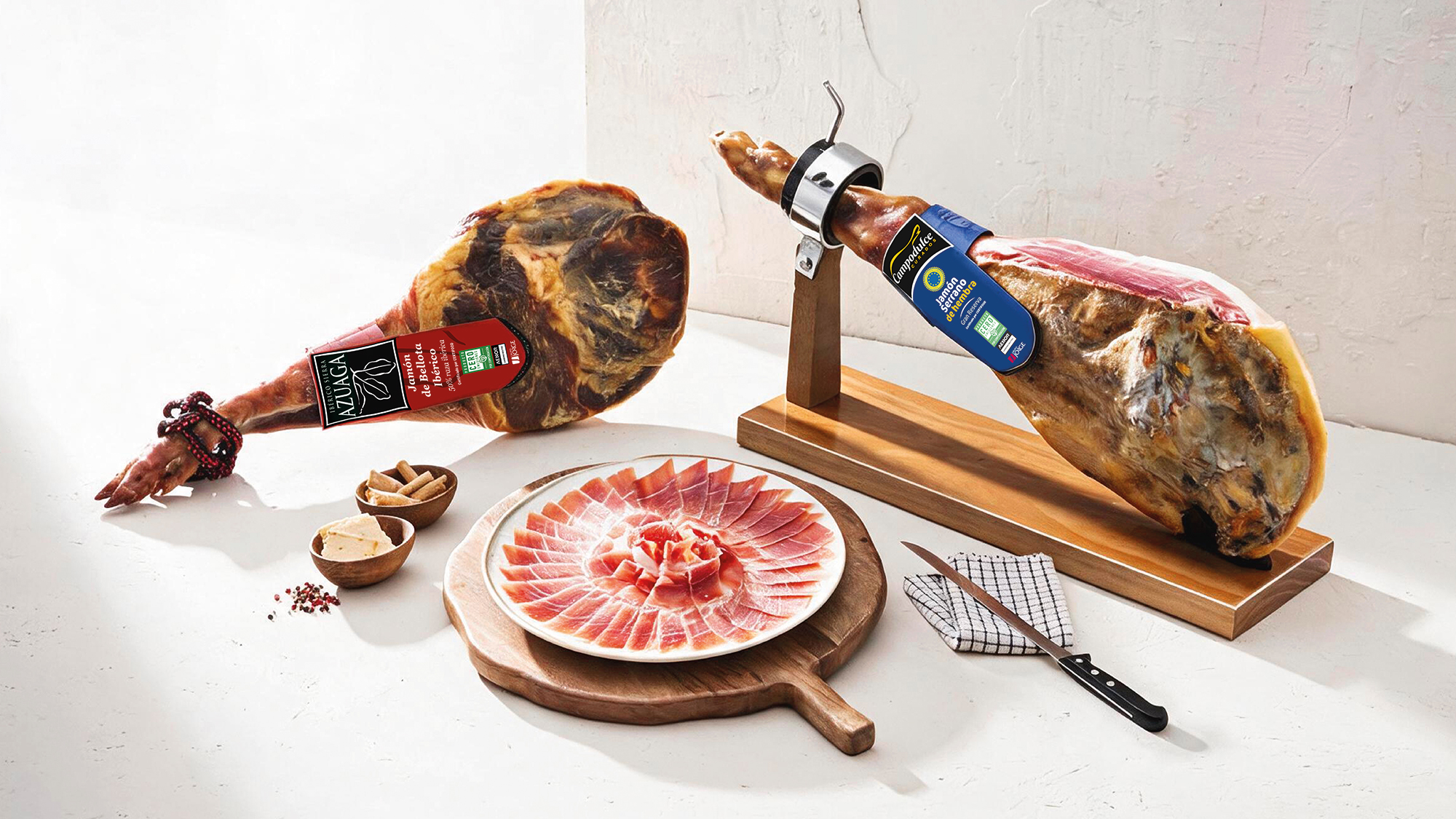
Serrano or Ibérico? Jamón (hind leg) or paleta (shoulder)? Choosing the right piece isn’t just about the price.
Knowing its origin, the animal’s diet, the level of fat marbling, or the curing time can help you find exactly what you’re looking for. To clear up any confusion, Campodulce helps us make the right choice. When standing at a deli counter, terms like serrano, ibérico, bellota, cebo, reserva, or gran reserva can be confusing.
A quick and effective overview of the differences between ham from white-breed pigs and ibérico (Iberian) pigs:
A quick and effective overview of the differences between ham from white-breed pigs and ibérico (Iberian) pigs:
Ham from white-breed pigs:
To be labeled as serrano, the ham must meet specific requirements: it must undergo a minimum curing period of 210 days and adhere to set standards for fat and salt content. It is possible to sell ham that has been cured for a shorter period, but in such cases, it must be labeled simply as "cured ham" (jamón curado).
Furthermore, to be classified as Bodega, the ham must be cured for at least 9 months; for Reserva, at least 12 months; and for Gran Reserva, at least 15 months.
Jam from ibérico (Iberian) pigs:
To be labeled as ibérico, the ham must undergo a minimum curing period of 24 months. The individual pieces must weigh more than 7 kg.
Additionally, within this category, there are different profiles based on the animal’s diet and genetics:
• Cebo: The animals are fed commercial feed. Typically, they are 50% ibérico—sired by a Duroc boar, with a 100% ibérico mother. These are identified by a white tag.
• Cebo de campo: These animals are also fed commercial feed, but they have access to at least 100 m² of space per animal, including an outdoor area. They are identified by a green tag, which applies to both 50% and 75% ibérico breed purity.
• Bellota (Acorn-fed): These pigs are raised in dehesas (pasturelands) from the time they weigh 100 kg. During the montanera — the acorn season — they must feed exclusively on acorns and grass until they reach 160 kg, with a minimum space of 1.5 hectares per animal. In this category, the tag is red if the pig is 50% or 75% Iberian, and black if the animal is 100% Iberian breed.
Jamón (hind leg) or paleta (shoulder/front leg)?
Another common point of confusion is using the term "jamón" to refer to any cured leg. A jamón comes from the animal’s hind legs, while a paleta comes from the front legs. The difference goes beyond just size: the jamón is a larger cut with more meat and, generally, a longer curing period. The paleta is smaller, has a higher proportion of bone and fat, and often offers particularly intense flavors. Therefore, a paleta is not necessarily a lower-quality product.
Making the right choice starts with knowing what you are looking for.
The next time you are faced with a cured leg, don’t just look at the price. Check all the details mentioned above. Choosing the right jamón isn’t about how much you spend; it’s about understanding what each piece offers and finding the one that best suits your preferences.