

The Aragonese agri-food giant that exports to half the world: this is Grupo Jorge.
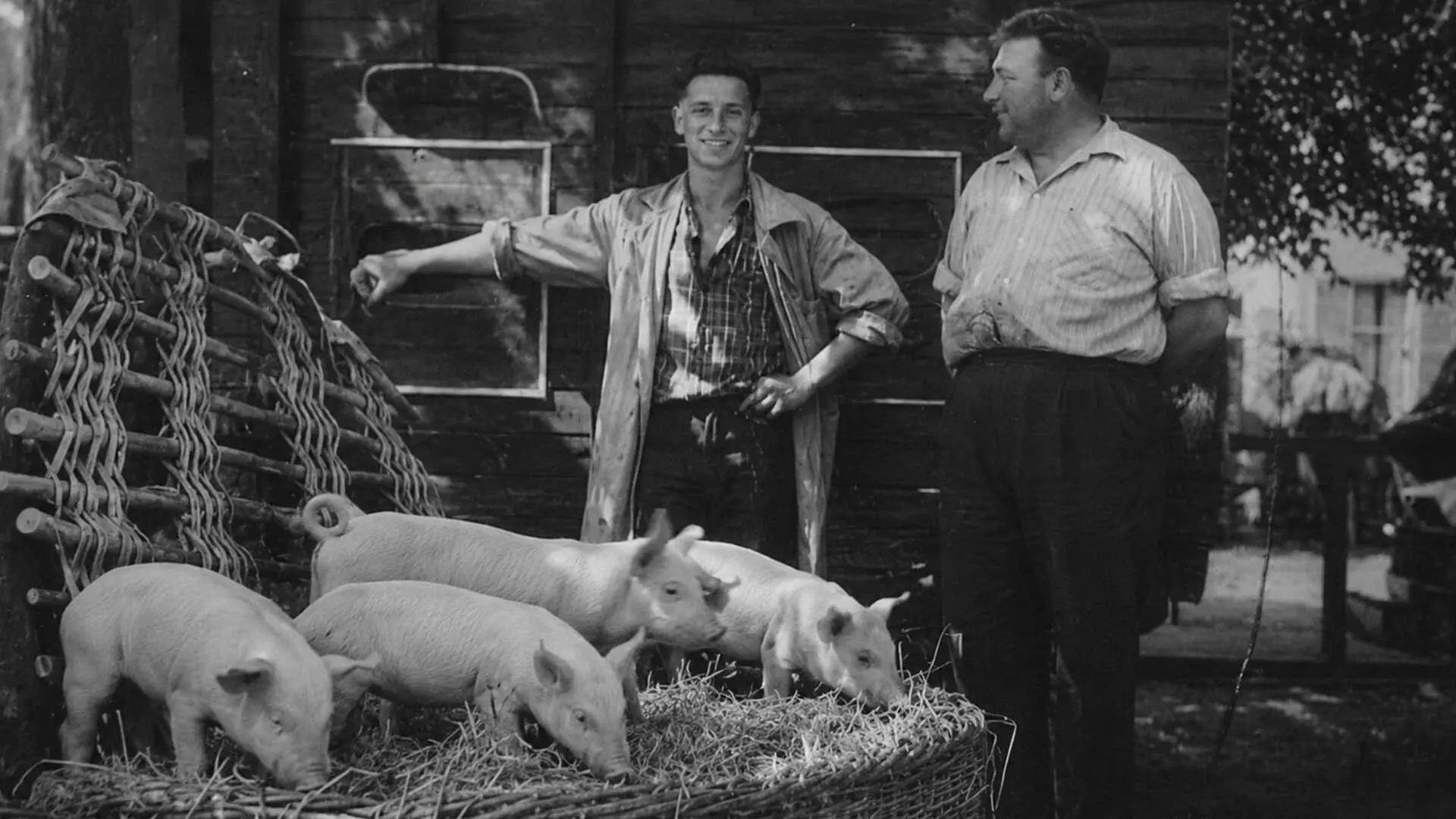
From One Pig at a Time to Over 100 Countries: The Story of Grupo Jorge
It is remarkable that a company which began by buying and selling pigs in the 1940s has grown into one of Europe's largest exporters of pork, with sales in over 100 countries.
This is the story of Grupo Jorge, a family business that achieved great scale without ever losing its Aragonese roots.
It all began with personal, hands-on relationships. In the 1940s, Tomás Samper Albalá started out buying and selling pigs: a cycle of purchasing, selling, and starting all over again. Back then, there was no talk of exports or corporate groups; business was conducted one pig at a time, with a strong focus on client relationships.
The son with the broader vision
Between 1960 and 1980, his son, Fernando Samper Pinilla, took the reins and continued to develop the family business, driven by a clear vision: hard work and a desire to build a lasting legacy. The commercial activity grew steadily until 1984, when the company took its first major strategic turn.
That year, Jorge, S.L. was founded, and the company shifted from merely buying and selling animals to raising them. Farms were integrated into the business, transforming the company from a simple intermediary into a producer in its own right.
A fully integrated production process
In the 1990s, the company took another significant step by incorporating slaughtering and butchering operations, with two facilities in Zuera (Zaragoza) and Santa Eugènia de Berga (Barcelona). This expanded its role across the entire production chain, from the farm all the way to the final market.
In 1999, Grupo Jorge began marketing cured hams processed in third-party drying facilities, and in 2007, it opened its own curing facility in Zuera, with a capacity for over 700,000 units. In doing so, the company added the production of cured meat products to its core operations.
Since then, the group has continued to expand its presence across all stages of pork production: breeding, feeding, slaughter, butchering, processing, and marketing. It is a model that allows for comprehensive control over the entire process.
Looking to the future
The Samper family also diversified their activities beyond the meat industry. In 1999, Grupo Jorge launched its first wind farm on company-owned land in the Ebro Valley, taking advantage of the region's favorable conditions. By 2008, the group had incorporated photovoltaic energy and also developed forestry projects focused on planting high-value hardwoods.
At the same time, the company continued to grow its meat business. In 2010, it entered the Iberian pork sector by acquiring a significant stake in Mafresa, thereby adding Iberian pork products to its portfolio.
In 2022, the Grupo Jorge Foundation was established, aimed at advancing the company's social commitment through environmental stewardship initiatives and support for those most in need.
Looking at the world from Aragon
Perhaps the most remarkable aspect of this story is how far the company has come. Today, Grupo Jorge is one of Europe's largest exporters of pork products, with sales in over 100 countries worldwide.
This international footprint is the result of decades of commercial relationships, further strengthened between 2012 and 2013 with the opening of offices in France, Japan, and China. This expansion has enabled the company to establish a firm foothold in strategic and demanding markets, following the attainment of all necessary official certifications.
More than eight decades after those initial business dealings, the Samper family remains at the helm of a company that, despite its international growth, has kept its Aragonese roots and the original spirit of hard work that started it all firmly intact.