

80 laboratory technicians attend ANPSTAND’s first training course: “Excellence and Innovation in Semen Quality.”
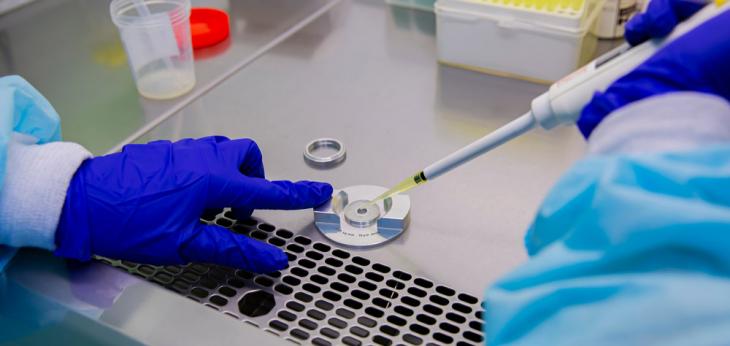
Concepts and factors related to seminal quality and fertility have been detailed, along with the objectives of the quality standard being developed by the ANPSTAND Operational Group.
80 technicians, along with other laboratory staff, attended the first online course on "Excellence and Innovation in Seminal Quality," organized by the ANPSTAND Operational Group as part of its innovative project.
In the first part of the course, Joaquín Gadea, Professor in the Department of Physiology at the University of Murcia and IMIB Researcher in the Reproductive Physiology and Assisted Reproduction group, addressed the importance of seminal quality and its relationship to fertility, as well as the main factors affecting fertility: those related to females; the timing of insemination; the number of sperm per dose; factors associated with the male; and seminal quality. He also detailed concepts such as sperm quality, motility, concentration, and bacterial contamination.
Meanwhile, Adoración Dorente, Technical Director of the National Association of Select Pig Breeding (ANPS), explained, among other topics, the objectives of the seminal quality standard for all pig insemination centers in Spain that the ANPSTAND Operational Group is working on. These objectives include: launching a common certification to guarantee the minimum characteristics that doses produced at the centers must meet and to ensure traceability of processes; defining and implementing innovative strategies; promoting improvements in biosecurity and hygienic conditions; and drawing up a best practices manual for insemination centers.
Trinidad Ansó, from the Cinco Villas Artificial Insemination Center, and Amelia Martín, from Cobadú, presented the 10 protocols currently being developed to ensure optimal conditions for insemination animals: facility measures; animal handling, biosecurity, animal welfare, health and hygiene, and work processes; semen collection, ejaculate processing, and dose preservation and distribution, quality control and data traceability; and an Environmental protocol.
ANPSTAND
This is an Operational Group led by the National Association of Select Pig Breeding (ANPS), made up of livestock farmers and companies dedicated to the selection and improvement of purebred and hybrid pig breeds. Its goal is to define and implement a seminal quality standard for pig insemination centers in Spain, encompassing studies, trials, protocols, and procedure manuals that will help Spain continue leading global pig production. ANPSTAND represents a clear commitment from the sector, which has voluntarily chosen to refine and standardize artificial insemination processes.
To carry out this innovative project by the ANPSTAND Operational Group, funding of €575,833.91 has been granted, co-financed 80% by the European Rural Development Fund (ERDF) and 20% by MAPA (Spain's Ministry of Agriculture, Fisheries and Food).